2. Dual Battery Setup
So I spent a long time looking at options for the dual battery setup before settling on the hardware I picked. Some of the things that went into consideration were:
-Override switch for the House battery as a backup to ‘jump start’ a drained main battery
-Separate House electrical system for added accessories to not drain the main battery
- Override switch for the House battery to support the start battery / alternator for high current demand winching (the one accessory planned to connect directly to the main battery
-Ability for House battery to handle long term current drain w/o charging ie refrigerator, inverter, lights, etc.
-Ability to incorporate a solar charging system in the future future
Battery Selection – I went with an AGM battery from Batteries Plus (made by NorthStar). It comes with a 60 month replacement warranty and will handle both high current starting and tolerate deep cycle discharges. It has a 69 AH capacity in the stock Group 48 size.

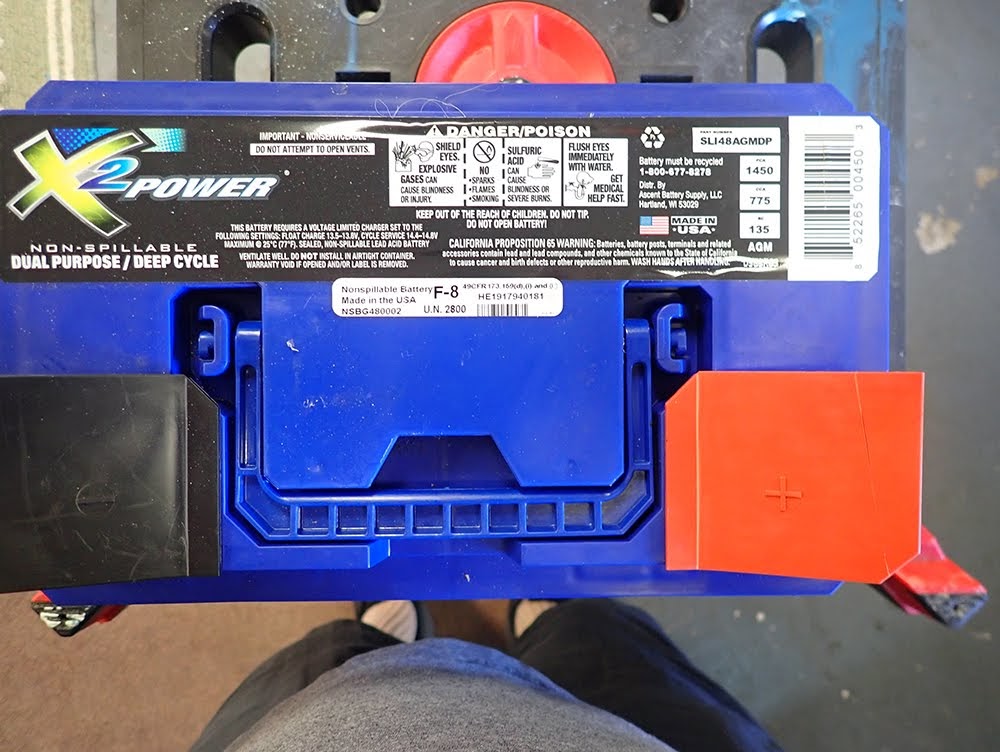
GM was nice enough to leave the driver front battery tray in place when they moved the Main battery back to the passenger firewall location for later year Suburbans. So all I needed was an $8 hold-down from the Chevy dealer and a bolt.
Here’s the stock second battery tray. Thanks GM!

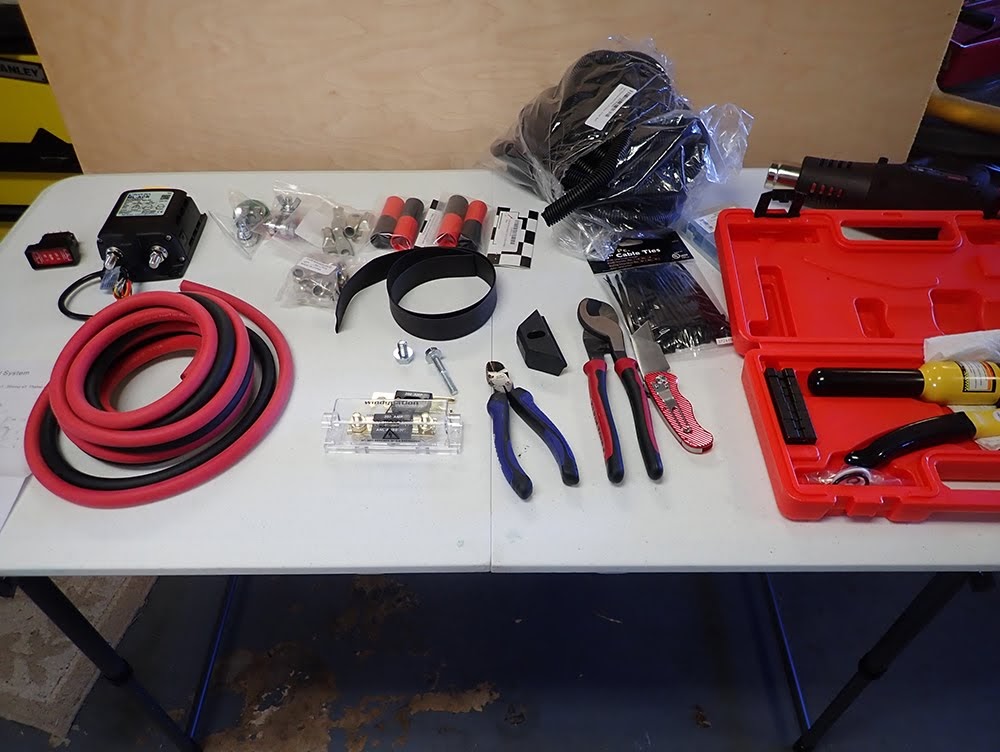
So let’s get everything else together:
10 ft x 2 (Black and Red) 1/0 Welding Cable
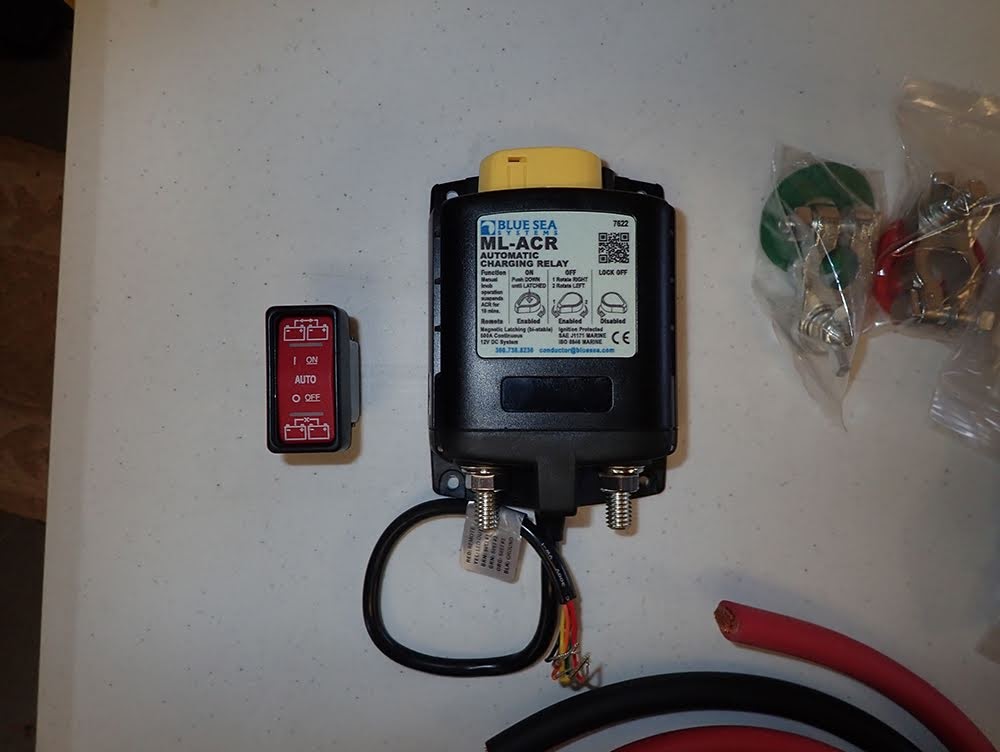
Blue Sea ML ACR (Magnetic Latch Automatic Charging Relay)
200 A ANL Fuse Holder / Fuse
Battery Terminals
Shrink Tubing
Copper 1/0 terminal connectors
Hydraulic Crimping Tool (I highly recommend you use this or get pre-made cables)
Battery Hold down
Misc tools
The Blue Sea ML ACR was selected for several reasons. It has a high 500 A capacity rating on the relay. It automatically senses charging voltages on either circuit and closes the relay to connect the batteries after the charging voltage is sensed for 30 seconds. This delay gives the alternator a chance to bring back up the start battery without overloading it with a discharged house batteries. It has a low voltage sensor that will keep the batteries isolated with certain low voltage conditions. It has a manual override lever directly on top of the relay to either lock out the relay or force it to engage. It also has a remote switch that can be mounted in the cab to perform the same override functions.
1/0 Welding cable was used to connect the two battery’s positive terminals with the fuse and relay placed in line. The 200 A ANL Fuse for the new House battery was mounted on the fender wall next to the main fuse block. This keeps it close to the House battery that it’s protecting. It also is convenient for future power connections on the House circuit.

The House battery ground was connected to the stock grounding point for the second battery on the engine block.

Selecting a good spot for the ML ACR was a bit more difficult. I finally settled on the fender wall next to the Main battery. It gets some protection there but still offers easy access to the override lever.
***IMPORTANT NOTE: You can see below that when the new cable is routed to the firewall, it gets real close to the hing location when closed. I had to zip tie the cabling down tight near the battery tray to keep it from being hit by the hinge mechanism.

The positive 1/0 cable is connected to the Main Battery directly at the fuse terminal mounted on the positive battery terminal.
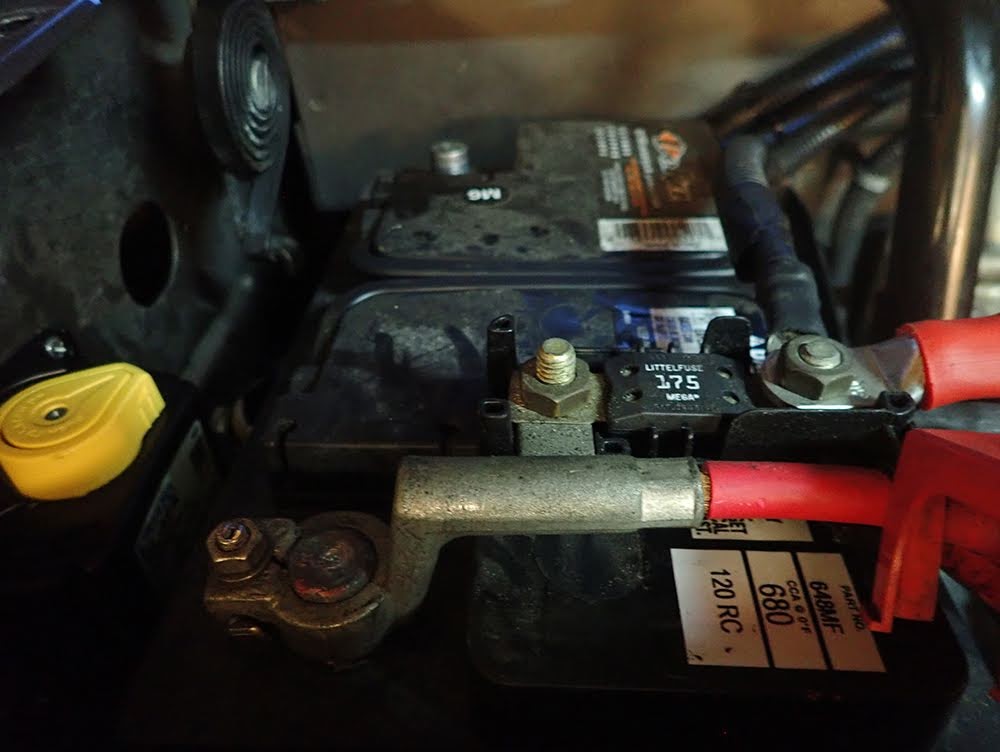
Here’s the finished Relay and cabling next to the Main battery.

Clever placement!