Portable heater

grubworm

Rank V
Launch Member

Member III

2,358
louisiana
First Name
grub
Last Name
worm
Member #

17464

Service Branch
USN-Submarines
you can search the gear section and see a thread about diesel heaters

there have been several threads on here about the buddy propane heaters, but they are scattered around the forum under different topics and hard to find.
i personally started with a buddy heater years ago and really didnt like it because it did put out CO and creates a lot of condensate...we'd wake up wet in our small tear drop camper and the walls and ceilings would be dripping with condensate.

i just went with a diesel heater last month and i think it is superior to the propane heaters...no CO and zero condensate
 
I second @grubworm with the diesel heater, we have used tents for years, mostly unheated mainly because we pretended to be tougher back then, but more likely too cheap. Even sleeping with the windows open resulted in a tent that was wetter on the inside than the outside. Enter the Mr Buddy Heaters, they produced a nice warm, but soaking wet tent, the amount of moisture produced by burning propane indoors is immense, far more than the heat is capable of drying out. Australia has some really neat propane heat exchanger units that keep the combustion air separate from the conditioned air in the tent, however not available in North America for some reason. The diesel heaters run under the same principal where there are separate air inlets and exhausts for the burner and the hot air for the living area. For the basic tent use, the heater itself sits outside with a small inlet and exhaust pipe for the burner and then a larger air intake for the heated air and a flexible hose that you run into your tent for heat. The heaters are available pre built in a metal case, or as a bunch of parts to hard mount in a vehicle or DIY into a weather proof case of your choice. we went with an all in one solution and it has worked perfect for us, just need to make sure its covered or under an awning as the manufactures case is not waterproof.

One issue with the all in one units is the thermostat is on the heater itself and will be located outside so it will likely force the heater to run full tilt as it will always read cold. Switching the heater to manual mode allows (on our unit anyway) selecting heating levels from 1 to 12 with the remote control so the heater just chugs along at a fixed level, you just have to pick which one works best for the conditions. We will crank it up when using the annex and hanging out playing cards etc,, then set it to level 1 or 2 for the night which keeps the chill off and allows for our RTT side windows to be cracked. then notch it up a few levels a little bit before time to get up. Even better than waking and getting dressed in a warm tent is that everything including the tent is DRY. If its not raining the outside of the tent will be free of dew also, so we pack away a fully dry tent.

There is an option to use a return air hose back to the inlet side of the heater so that it works more like a house furnace bringing cooled air back from the tent and re-heating it instead of always heating outside cold air this will increase the efficiency of the unit quite a bit, however it may also increase the moisture content due to recirculating moisture caused by breathing. We go with 100 percent outside air and have had no issues.
 
I second @grubworm with the diesel heater, we have used tents for years, mostly unheated mainly because we pretended to be tougher back then, but more likely too cheap. Even sleeping with the windows open resulted in a tent that was wetter on the inside than the outside. Enter the Mr Buddy Heaters, they produced a nice warm, but soaking wet tent, the amount of moisture produced by burning propane indoors is immense, far more than the heat is capable of drying out. Australia has some really neat propane heat exchanger units that keep the combustion air separate from the conditioned air in the tent, however not available in North America for some reason. The diesel heaters run under the same principal where there are separate air inlets and exhausts for the burner and the hot air for the living area. For the basic tent use, the heater itself sits outside with a small inlet and exhaust pipe for the burner and then a larger air intake for the heated air and a flexible hose that you run into your tent for heat. The heaters are available pre built in a metal case, or as a bunch of parts to hard mount in a vehicle or DIY into a weather proof case of your choice. we went with an all in one solution and it has worked perfect for us, just need to make sure its covered or under an awning as the manufactures case is not waterproof.

One issue with the all in one units is the thermostat is on the heater itself and will be located outside so it will likely force the heater to run full tilt as it will always read cold. Switching the heater to manual mode allows (on our unit anyway) selecting heating levels from 1 to 12 with the remote control so the heater just chugs along at a fixed level, you just have to pick which one works best for the conditions. We will crank it up when using the annex and hanging out playing cards etc,, then set it to level 1 or 2 for the night which keeps the chill off and allows for our RTT side windows to be cracked. then notch it up a few levels a little bit before time to get up. Even better than waking and getting dressed in a warm tent is that everything including the tent is DRY. If its not raining the outside of the tent will be free of dew also, so we pack away a fully dry tent.

There is an option to use a return air hose back to the inlet side of the heater so that it works more like a house furnace bringing cooled air back from the tent and re-heating it instead of always heating outside cold air this will increase the efficiency of the unit quite a bit, however it may also increase the moisture content due to recirculating moisture caused by breathing. We go with 100 percent outside air and have had no issues.


Wow thanks for the info I'm gonna have to look into that
 
  • Like
Reactions: OTH Overland
you can search the gear section and see a thread about diesel heaters

there have been several threads on here about the buddy propane heaters, but they are scattered around the forum under different topics and hard to find.
i personally started with a buddy heater years ago and really didnt like it because it did put out CO and creates a lot of condensate...we'd wake up wet in our small tear drop camper and the walls and ceilings would be dripping with condensate.

i just went with a diesel heater last month and i think it is superior to the propane heaters...no CO and zero condensate

Thanks for the tip I'm gonna look into a diesel heater
 
  • Like
Reactions: grubworm
Another issue with the Buddy Heater Mini is they don't seem to work well at high altitude >11000ft. Had no issues at Mahogany Flats 8200ft or Grandview 8600ft, wouldn't light at White Mountain Peak trailhead 11680ft. In CA very rare to camp above 10000ft so not really an issue.
 
  • Like
Reactions: Sam30931_xterra
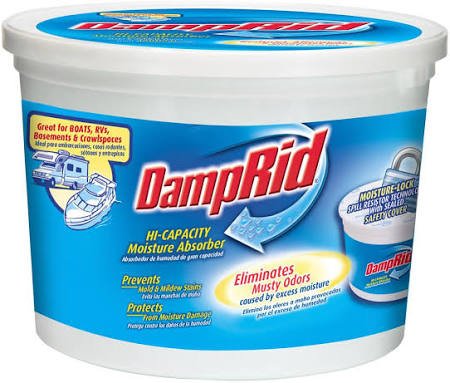
Has anyone used a desiccant while running their buddy/propane heater? something like this?
desiccant.jpeg

I remember using something like this when when our "laundry room" was in the the middle of the house with no venting and our dryer was a giant humidifier. I'm thinking of trying this.