Overland Lube

just remember OB members...I'M going down this lube rabbit hole so YOU don't have to!

here's more good info:

if you want to lube something and don't like the aerosol cans or the expensive price of the small plastic bottles of machine oil, then getting something like the spring bottom oiler or even the pump oiler and use a SAE30 non-detergent oil. cheap and easy to find and without the additives of regular motor oil, it will perform better. I have seen where Marvel Mystery oil is used, but like I said earlier...I used it and it gummed up really bad in the can after long time storage.
if you need a good penetrating oil, mix 50/50 automatic transmission fluid with acetone and that will penetrate well and really help loosen rusted nuts.

I know everyone uses WD-40 as a lube and it does work short term, but the "WD" stands for "water displacement" as it was originally used more as a solvent, getting rid of moisture in a distributor cap, etc and was used to clean parts and THEN lube the part with something like white lithium grease as @lolzhax posted earlier. Whatever lube qualities WD-40 has, is quickly lost as the solvents evaporate and the very thin film of lube oil dissapates quickly, therefore making it useless for actual lubrication.

I read up on mineral oils and machine oil is basically a mineral oil with additives and the benefits of the different additives was interesting to read, but impractical to memorize, so the SAE30 just seems to cover all bases.

also, as I'm sure most on here already know, any petroleum base lube is not good to use on rubber or plastic. I have seen people spray down radiator hoses and other plastic/rubber engine parts with WD-40 and that will make them look shiny and nice, but is actually eating away at it. Silicone is the only lube to use on rubber and plactic. The spray silicone is a bit expensive, but good and a little goes a long way. I use the silicone tire shine for engine components. I bought bottle of it years ago, the brand was (Black Magic) and it works great. I just used it to recoat my coil boots when changing spark plugs. I bought mine quite a few years ago, so not sure if its still a 100% silicone product. It used to be and the stuff I have works great.

LUBE is not as simple as one would think...
I recently took apart my wife's 2 big KitchenAid mixers and had to clean and reapply gear grease. After going down THAT rabbit hole, I found out that there is an actual cert rating for the food grade grease that goes on gears in a mixer. I didn't know that until I almost got the wrong grease off Amazon. (don't blindly trust Amazon description OR reviews)

There is also a specific lube for use on brake calipers and slide pins. I just swapped out brakes on the wife's jeep sahara and came across the specs requiring a special grease.

I spent my high school years on a farm where EVERYTHING got lubed with either motor oil or moly grease. I pretty much kept that going until I actually started reading and found out there is an actual science to lubrication and not all lubes are created equal...

While we're on the topic of lubes...I researched a bit on different motor oils and THAT was a rabbit hole unto itself. I recommend y'all go do a little research on motor oils, because apparently some brands actually wreck motors. I use Mobile 1 across the board and that was tested to be a really good oil, but even some of the versions of Pennsoil are not good for certain engines and the Walmart brand "Super Tech" is apparently (not surprisingly) the worst and caused significant damage in the test engine using it.

AND...just when I thought it couldn't get any worse...I found THIS brand of oil...:disappointed:


View attachment 297376
At least with this brand, you can pick up a quart every 5 miles.
1769281177210.png
 
wow...this lube rabbit hole seems to have no bottom to it....

I guess what prompted this whole thing was a bad visit at my Toyota dealership. I've been going to the dealership for everything, including oil changes, and the service has been getting worse and worse. The last visit had me getting chastised by a very angry female (i think) that had a very short and weird haircut dyed purple with face piercings and a very hostile attitude. I made an appointment in the morning and was waiting in the waiting room when my wife came by to get me to go eat lunch with her. My oil change should have been done by the time I got back so I get back and see my truck isn't done yet and its been over 3 hours for a simple oil change. The angry person at the service counter with the rocking haircut proceeded to go off on me for leaving the dealership and not waiting in the waiting room. She said that since I left the waiting room, I should have to wait until the end of business hours to get my truck...even though I had it there at the appointment time. She said it wasn't fair to the others in the waiting room that I left to go eat lunch while my truck was being serviced. Management seemed scared to even get involved and they promptly went to bury their head in the sand when I questioned the ordeal...

so now i'm doing all my own maintenance and learning all I can about replacing fluids, etc...

one interesting thing i've come across in my "lube rabbit hole" is that apparently dealerships all over are not changing fluids as they should. My Tundra hit 120,000 before the dealership even mentioned that the transmission fluid needed to be changed. I have the truck in every 5,000 miles for oil and whatever else needs to be done. I read on transmission fluid, and pretty much everything I have read says to change it at 60,000. I tow a lot, so that should even be more frequent. I am glad that I got upset and decided to do maintenance myself, because besides the shitty service I received personally...it doesn't look like my truck is getting any better service. Some internet postings are saying that dealerships are not changing fluids on time so that things will fail and they can make even more money. I have no way of verifying that, but it also doesn't surprise me if that were true in some cases...

anyway, some interesting things I've come across are: Dot 3 brake fluid is the standard...BUT Dot 4 should be used with ABS brakes and in harsher environments because it has a higher boiling point. the Dot 4 fluid also absorbs moisture faster and thus needs to be changed sooner than Dot 3. who knew?

also finding that some motor oils have additives that are actually damaging to some engines. saw some videos where a shop specifically tested new engines with different oils and actually had hard data backing that up. pretty interesting...
mobile 1 synthetic seems to be rated as the best by pretty much every mechanic chiming in on oils...

also found out that differential oil does NOT go into a transfer case. not sure where I got that idea, but glad that I read and found out before doing it the wrong way.

I already covered the different lubes for a brake job and how the guide pins need a silicone lube because of the rubber boot and caliper grease would eventually break down the rubber in the boot if used there.

getting ready to dive into power steering fluid and see what that is all about.

here is one I am still on the fence about: the wife's jeep Sahara has 130,000 miles without the transmission fluid being changed. again, another dealership NOT doing what they are supposed to be doing. I have heard that if you have that many miles on the original fluid..DO NOT change the fluid because it will cause problems. I also heard that it would be ok to change the fluid and filter as long as I don't do a flush. I get that for sure, but i'm still not certain if I want to change the fluid and filter...I did buy a new filter and gasket and I'm contemplating if I should change the fluid this late in the game....'

wonder what other fluids and lubes I need to worry about...I know my trailer axles need bearing grease at some point in time...but what about a vehicle axle?
back into the hole I go!

1771791341203.png
 
Last edited:
That’s one helluva big rabbit! I’ve noticed that Toyota dealerships are slow with the oil changes , but I buy the “5 pack” that includes the tire rotation and it’s significantly cheaper than even my good local mechanic . You can use them nationwide for extended travel - bonus!
Super dork that I am, I have a spreadsheet for various maintenance items: Oil changes, tire rotation/replacement, differential fluid, transfer case oil, coolant, brake fluid, transmission fluid, spark plugs, battery and a few other items. Some are just reminders to check the condition and like you, I tow a trailer, so I skew to the lower mileage range for some maintenance. With two trucks, it’s easy to forget. Or maybe that’s old age…I forget..
 
Good stuff!
Motor oil is really a “do all” product. We used to pour used motor oil on farm fence post so they would not deteriorate. A wood 4x4 post would last twenty or more years.

Well
That brings back memories. As kids, we were tasked with painting creosote on fence posts and boards to prevent rot and bug infestation (somehow always in the summer heat, too). It worked, but was messy and stunk to high heaven.
 
Super dork that I am, I have a spreadsheet for various maintenance items:
that's exactly what I'm going to have to do...
i've always been busy with other things and always had a dealership take care of my maintenance so I never learned what all needs to be done. that's changing for several reasons and now I'm researching to see WHAT needs to be done and WHEN it needs to be done and what it needs to be done WITH. once I get the data, I will have to make a spreadsheet to help me remember time intervals as well as what product to use.

like I said...there is a LOT to getting the right lubes/fluids for a vehicle. way more than I initially realized...that's why I thought this thread would be good...especially for newer folk who, like me, needed to be made aware of this.
 
My 2018 F-150 is currently in the shop get timing chain and cam phaser work done it, thankfully I have the Endurance Extended Warranty! That in itself was a battle, they wanted receipts and a log of my last 3 oil changes, digging up that information was difficult, now I'll be saving receipts, and I already created an oil change log!

I had an interesting talk with the guy managing the repair of my truck when he asked me what oil I used. I told him Penzoil Synthetic every 5000 miles and he told me they haved a lot of problems with vehicles using that oil. Personally he doesn't recommend synthetic saying the EPA regulations on it cause problems like moisture in the oil and other ingredients not good for the engine. He's going to take some before and after pictures of the gunk he said was coated on my engine and recommended I switch back to a good regular oil instead of synthetic. Now I'm going to be researching motor oil determine what is really true! I'm glad Trump recently took the EPA handcuffs off the auto industry, maybe things will start to improve!
 
  • Like
Reactions: grubworm
My 2018 F-150 is currently in the shop get timing chain and cam phaser work done it, thankfully I have the Endurance Extended Warranty! That in itself was a battle, they wanted receipts and a log of my last 3 oil changes, digging up that information was difficult, now I'll be saving receipts, and I already created an oil change log!

I had an interesting talk with the guy managing the repair of my truck when he asked me what oil I used. I told him Penzoil Synthetic every 5000 miles and he told me they haved a lot of problems with vehicles using that oil. Personally he doesn't recommend synthetic saying the EPA regulations on it cause problems like moisture in the oil and other ingredients not good for the engine. He's going to take some before and after pictures of the gunk he said was coated on my engine and recommended I switch back to a good regular oil instead of synthetic. Now I'm going to be researching motor oil determine what is really true! I'm glad Trump recently took the EPA handcuffs off the auto industry, maybe things will start to improve!
wow...see, it is a bit of a rabbit hole!
concerning synthetic oils...I was told by a mechanic years back that its OK to go from conventional oil to synthetic...BUT, once you go to synthetic, you CANT go back to conventional oil. I was told the synthetic oil makes a coating that bonds to the metal and switching back to conventional oil will cause big problems. not sure how true that is, but definitely something I will research.

maybe you are on to something about sticking to conventional oil...seems like everything that is "synthetic" usually ends up being worse than the original...
 
  • Like
Reactions: Viking1204
Well, my initial investigation seems to support that Synthetic Motor Oil is definitely better than conventional oil. I did find that the Pennzoil Full Synthetic I was using wasn't the best. I will probably go with Mobile 1 Extended Performance Full Synthetic, it's at the top of most reviews and I can find it pretty easily at a decent price. Amsoil was the top rated but at almost twice the price of the Mobil 1 and harder to find. I'm good with what I've read on the Mobil 1 Extended Performance High Mileage since my truck is over 138,000 miles!
 
  • Like
Reactions: grubworm
Mobile One has been doing good in my V-6 Tacoma. Same experience with dealer maintenance. It was good until they got bought out and consequently went downhill...like off a cliff. Did have a few trusted people that I would try to deal with but thankfully I have a good mechanic I can trust and easy to work with. Owner's Manual has much of the scheduled maintenance inside. I try to stay ahead of the major things since I tow some too. My mechanic swears things like differential oil don't degrade much. Also saw some saying if you don't change your transmission fluid before like 130-150K probably best to DON'T. Before I do another cross-country we will put it on the rack and do a hands on to everything. At 135K I have changed everything at least once.

I would like to go full-sized in the next year or two but don not have an inherent love of turbos the Toyota is pushing.
 
  • Like
Reactions: grubworm
Mobile One has been doing good in my V-6 Tacoma. Same experience with dealer maintenance. It was good until they got bought out and consequently went downhill...like off a cliff. Did have a few trusted people that I would try to deal with but thankfully I have a good mechanic I can trust and easy to work with. Owner's Manual has much of the scheduled maintenance inside. I try to stay ahead of the major things since I tow some too. My mechanic swears things like differential oil don't degrade much. Also saw some saying if you don't change your transmission fluid before like 130-150K probably best to DON'T. Before I do another cross-country we will put it on the rack and do a hands on to everything. At 135K I have changed everything at least once.

I would like to go full-sized in the next year or two but don not have an inherent love of turbos the Toyota is pushing.
yeah, I've been using mobile 1 for everything, including lawn mowers, etc.
I have a 2018 Tundra and it is the best pick up I have owned...its a shame what Toyota did to the 3rd gen Tundras...
 
I have a squishy plastic can with a thin spout like the pump oilers, 20 years old and doesn't leak or something, just works.
 
  • Like
Reactions: grubworm
wow...this lube rabbit hole seems to have no bottom to it....


here is one I am still on the fence about: the wife's jeep Sahara has 130,000 miles without the transmission fluid being changed. again, another dealership NOT doing what they are supposed to be doing. I have heard that if you have that many miles on the original fluid..DO NOT change the fluid because it will cause problems. I also heard that it would be ok to change the fluid and filter as long as I don't do a flush. I get that for sure, but i'm still not certain if I want to change the fluid and filter...I did buy a new filter and gasket and I'm contemplating if I should change the fluid this late in the game....'

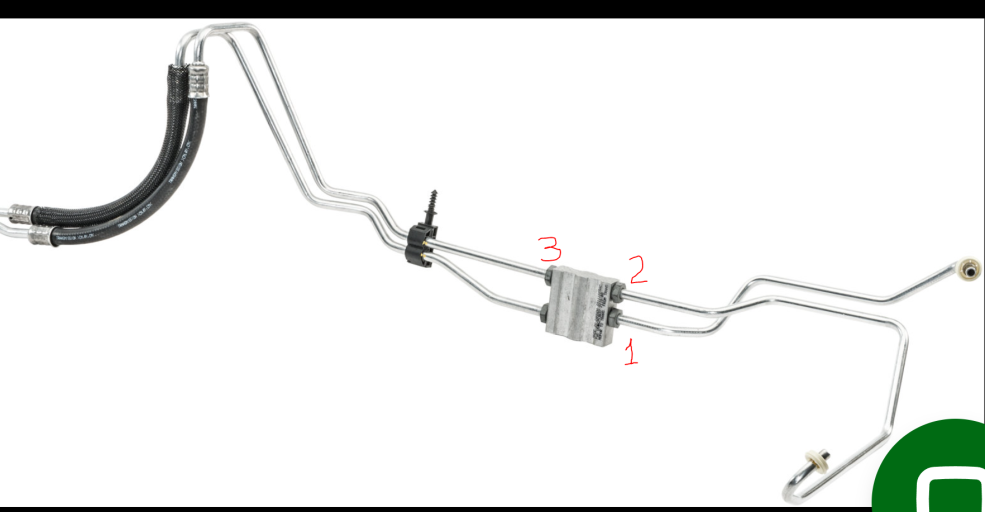
I prefer to flush out (using transmission pump, not a flushing machine) our JKU transmission while also replacing the filter, uses a bit more fluid but have been happy with the results after many changes in all the Jeeps had or worked on. Knock on wood have not had a transmission failure in any of them with over 250k on some of them. For the 12+ JKU I use a vacuum pump to draw the fluid from the oil pan to avoid a huge mess when dropping the pan to change the filter. Then remove the pan (a pain on the JKU due to crossmember and exhaust, manual recommends loosening the exhaust and dropping the crossmember, but can be done without given patients and previously emptied pan.) change filter and replace pan. Then I disconnect 3 of the lines at transmission cooler thermal bypass block located at the side of the engine just above the oil pan. Connect the two ends of the supply line from transmission to the cooler (2 & 3 below) together with a short rubber hose, and then I have a spare short piece of transmission line with a flare nut that I install into the open return line (1 below) from the cooler and point down into a bucket. (This whole procedure ensures that the thermal bypass is removed from the system to guarantee the transmission fluid will pass through the cooler to change that out also.) Then top off the oil pan with fresh fluid, have someone start the engine and you add fluid to the dipstick while old fluid pumps into the bucket. If you can't keep up, have the person shut off the engine as needed so you can top up. I run until I gone through the total dry capacity of the transmission plus two or three additional quarts. Clamp the drain hose and reconnect all the lines to the thermal bypass valve and do a final check on levels. This method allows the transmissions own pump to push fresh fluid through the entire transmission, torque converter and cooler. While you are working on the cooler lines, take a look and make sure the cheap plastic clip that holds the lines to the side of the engine has not broken! they tend to do that and the lines can hang down and snag on things.
1772223790207.png

I strive to change mine every 50k as its is always heavily loaded and spends a lot of its time going over passes and off road. So far I have found the filter and pan to be pretty clean at each change and no burned smell to the fluid
 
  • Love
Reactions: grubworm
I prefer to flush out (using transmission pump, not a flushing machine) our JKU transmission while also replacing the filter, uses a bit more fluid but have been happy with the results after many changes in all the Jeeps had or worked on. Knock on wood have not had a transmission failure in any of them with over 250k on some of them. For the 12+ JKU I use a vacuum pump to draw the fluid from the oil pan to avoid a huge mess when dropping the pan to change the filter. Then remove the pan (a pain on the JKU due to crossmember and exhaust, manual recommends loosening the exhaust and dropping the crossmember, but can be done without given patients and previously emptied pan.) change filter and replace pan. Then I disconnect 3 of the lines at transmission cooler thermal bypass block located at the side of the engine just above the oil pan. Connect the two ends of the supply line from transmission to the cooler (2 & 3 below) together with a short rubber hose, and then I have a spare short piece of transmission line with a flare nut that I install into the open return line (1 below) from the cooler and point down into a bucket. (This whole procedure ensures that the thermal bypass is removed from the system to guarantee the transmission fluid will pass through the cooler to change that out also.) Then top off the oil pan with fresh fluid, have someone start the engine and you add fluid to the dipstick while old fluid pumps into the bucket. If you can't keep up, have the person shut off the engine as needed so you can top up. I run until I gone through the total dry capacity of the transmission plus two or three additional quarts. Clamp the drain hose and reconnect all the lines to the thermal bypass valve and do a final check on levels. This method allows the transmissions own pump to push fresh fluid through the entire transmission, torque converter and cooler. While you are working on the cooler lines, take a look and make sure the cheap plastic clip that holds the lines to the side of the engine has not broken! they tend to do that and the lines can hang down and snag on things.
View attachment 297984

I strive to change mine every 50k as its is always heavily loaded and spends a lot of its time going over passes and off road. So far I have found the filter and pan to be pretty clean at each change and no burned smell to the fluid
Thanks Dave...that is a BIG help! Also appreciate the pic with annotation.
I was a bit apprehensive, but your directions are better than anything I've read on-line, so I will be getting on this pretty quick now.

Seriously...your post has explained this so much better than anything I've come across the last few weeks...including videos.
 
Last edited:
  • Like
Reactions: OTH Overland
im finding a LOT of info digging into this...

how many people know that teflon tape is a lubricant? I know a lot of people who use Teflon tape as a sealant, but it is designed to act as a lubricant on pipe threads that seal on a taper. Pipe threads seal by tightening the tapered threads and the more the fitting tightens, the more the wedge shape threads goes into the female fitting and makes a tighter seal. The Teflon tape acts as a lubricant and helps the wedge of the tapered threads engage more. Teflon tape is supposed to be used only on pipe threads as other fittings seal with o-rings (boss fittings) or flares like JIC fittings on propane lines.

It would be cool to have a library on here that has information like that in it. "Overlanding" is definitely a thing where people are more than likely going to have to make repairs out in the field and a lot of this info would surely come in handy...