My Trauma Kit

OldManJack

Rank IV

Advocate II

1,033
Ball Ground, Pickens County, Georgia, United States
First Name
Jack
Last Name
Coleman
Member #

30326

Ham/GMRS Callsign
K7JDC
Service Branch
US Army
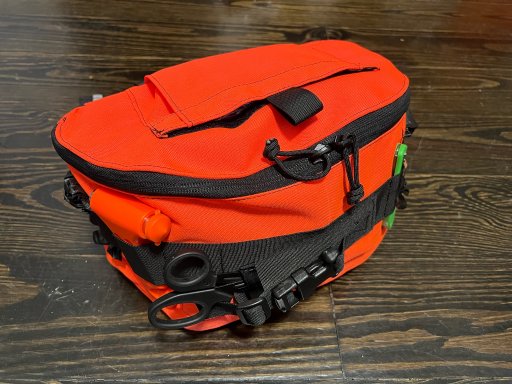
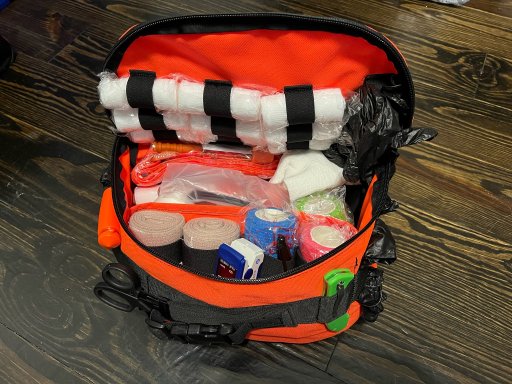
Finished compiling my trauma kit. Below are the items I selected with the associated cost.

I wanted to compile a trauma kit to deal with major injuries, typically life-threatening, and to keep someone alive until expert medical care can be reached. I also wanted enough materials for myself, my wife or a few people we may come upon.

For quick access, I have this kit attached to a molle panel on the back of the drivers side seat.

Airway:
CPR Face Shield x 5 - $6.97

Bleeding:
Tourniquet x 2 - $44.00
Israeli Bandage, 6" x 4 - $16.00
Clotting Strips x 4 - $40.00
Trauma Pads (12” x 12”) x 2 - $117.00
Rolled Gauze x 9 - $3.33
Non-adherent dressing x 4 - $6.00

Other:
Gloves x 6 pairs - $1.50
Trauma Shears - $8.15
Window-breaker and Seatbelt cutter - $5.50
Protective Eyewear - $15.00
Ace Wrap x 2 - $6.00
Tape, roll, cloth x 2 - $3.29
Self Adherent bandages x 4 - $6.00
Mylar Thermal Blankets x 4- $6.66
Fingertip pulse oximeter - $22.95
Bag, hip or over shoulder carry - $84.47

Total: $392.82

I also have a separate, First Aid Kit which is intended to deal with very basic, and superficial wounds, like your everyday cuts and scrapes.

This wasn't a cheap project, but it's money well spent IMO. It does give me peace of mind knowing I have these items in the event of an emergency.

Be safe and have fun!
 

Attachments

  • media.jpg
    media.jpg
    634.5 KB · Views: 83
  • media.jpg
    media.jpg
    687.1 KB · Views: 68
Finished compiling my trauma kit. Below are the items I selected with the associated cost.

I wanted to compile a trauma kit to deal with major injuries, typically life-threatening, and to keep someone alive until expert medical care can be reached. I also wanted enough materials for myself, my wife or a few people we may come upon.

For quick access, I have this kit attached to a molle panel on the back of the drivers side seat.

Airway:
CPR Face Shield x 5 - $6.97

Bleeding:
Tourniquet x 2 - $44.00
Israeli Bandage, 6" x 4 - $16.00
Clotting Strips x 4 - $40.00
Trauma Pads (12” x 12”) x 2 - $117.00
Rolled Gauze x 9 - $3.33
Non-adherent dressing x 4 - $6.00

Other:
Gloves x 6 pairs - $1.50
Trauma Shears - $8.15
Window-breaker and Seatbelt cutter - $5.50
Protective Eyewear - $15.00
Ace Wrap x 2 - $6.00
Tape, roll, cloth x 2 - $3.29
Self Adherent bandages x 4 - $6.00
Mylar Thermal Blankets x 4- $6.66
Fingertip pulse oximeter - $22.95
Bag, hip or over shoulder carry - $84.47

Total: $392.82

I also have a separate, First Aid Kit which is intended to deal with very basic, and superficial wounds, like your everyday cuts and scrapes.

This wasn't a cheap project, but it's money well spent IMO. It does give me peace of mind knowing I have these items in the event of an emergency.

Be safe and have fun!
Thanks for posting this. Decided to compile my own trauma kit rather than buy pre-packed. This is nice blueprint to work from.
 
Really nice kit. Well thought out. Two little items that I've had save the day in my little kit have been VetBond and Clozex skin closures. They have been nice to have in those, "eh, should I go get a couple of stitches" situations that can ruin a trip.
 
Finished compiling my trauma kit. Below are the items I selected with the associated cost.

I wanted to compile a trauma kit to deal with major injuries, typically life-threatening, and to keep someone alive until expert medical care can be reached. I also wanted enough materials for myself, my wife or a few people we may come upon.

For quick access, I have this kit attached to a molle panel on the back of the drivers side seat.

Airway:
CPR Face Shield x 5 - $6.97

Bleeding:
Tourniquet x 2 - $44.00
Israeli Bandage, 6" x 4 - $16.00
Clotting Strips x 4 - $40.00
Trauma Pads (12” x 12”) x 2 - $117.00
Rolled Gauze x 9 - $3.33
Non-adherent dressing x 4 - $6.00

Other:
Gloves x 6 pairs - $1.50
Trauma Shears - $8.15
Window-breaker and Seatbelt cutter - $5.50
Protective Eyewear - $15.00
Ace Wrap x 2 - $6.00
Tape, roll, cloth x 2 - $3.29
Self Adherent bandages x 4 - $6.00
Mylar Thermal Blankets x 4- $6.66
Fingertip pulse oximeter - $22.95
Bag, hip or over shoulder carry - $84.47

Total: $392.82

I also have a separate, First Aid Kit which is intended to deal with very basic, and superficial wounds, like your everyday cuts and scrapes.

This wasn't a cheap project, but it's money well spent IMO. It does give me peace of mind knowing I have these items in the event of an emergency.

Be safe and have fun!

Excellent job on a back country trauma kit! I have also learned after decades of travel in the backcountry as the "medical" person (Paramedic / PA) that you can creatively fabricate splints, dressings, tourniquets, etc. from a lot of the gear we normally take along. My most valuable item in my kit is an InReach satellite SOS communicator. Some injuries and illnesses are best treated with a helicopter and rapid evacuation to definitive care....
 
Saw these recently and wondered if they would be useful?
You know, in case I shot a bear but didn't kill it :dizzy:
 
Last edited:
  • Haha
Reactions: Sylvester
A good first aid / trauma kit is one of those thing many people buy because your supposed to have one, and they forget about it for many years until they need it. Always a good idea to pull it out on a regular basis and refamiliarize yourself with what is in the kit and where its stored so that you are able to find what you need on a dark rainy night. Also at the same time check to make sure everything is in good condition and not expired. The interior of our rigs gets very hot in the sun, and things like band aids, medical tape, rubber gloves etc. degrade much faster than at home, check supplies for expiration dates, any damaged packaging, and check the batteries on anything that has them. While travelling make sure everyone in your rig knows where the kit is kept. Also a good idea to refresh your first aid training every so often as its a skill most of us do not use all that often.
 
Finished compiling my trauma kit. Below are the items I selected with the associated cost.

I wanted to compile a trauma kit to deal with major injuries, typically life-threatening, and to keep someone alive until expert medical care can be reached. I also wanted enough materials for myself, my wife or a few people we may come upon.

For quick access, I have this kit attached to a molle panel on the back of the drivers side seat.

Airway:
CPR Face Shield x 5 - $6.97

Bleeding:
Tourniquet x 2 - $44.00
Israeli Bandage, 6" x 4 - $16.00
Clotting Strips x 4 - $40.00
Trauma Pads (12” x 12”) x 2 - $117.00
Rolled Gauze x 9 - $3.33
Non-adherent dressing x 4 - $6.00

Other:
Gloves x 6 pairs - $1.50
Trauma Shears - $8.15
Window-breaker and Seatbelt cutter - $5.50
Protective Eyewear - $15.00
Ace Wrap x 2 - $6.00
Tape, roll, cloth x 2 - $3.29
Self Adherent bandages x 4 - $6.00
Mylar Thermal Blankets x 4- $6.66
Fingertip pulse oximeter - $22.95
Bag, hip or over shoulder carry - $84.47

Total: $392.82

I also have a separate, First Aid Kit which is intended to deal with very basic, and superficial wounds, like your everyday cuts and scrapes.

This wasn't a cheap project, but it's money well spent IMO. It does give me peace of mind knowing I have these items in the event of an emergency.

Be safe and have fun!

Excellent job on a back country trauma kit! I have also learned after decades of travel in the backcountry as the "medical" person (Paramedic / PA) that you can creatively fabricate splints, dressings, tourniquets, etc. from a lot of the gear we normally take along. My most valuable item in my kit is an InReach satellite SOS communicator. Some injuries and illnesses are best treated with a helicopter and rapid evacuation to definitive care....

I LOVE my InReach as I Bluetooth it to my iPad Pro using Gaia as my electronic map.
 
  • Like
Reactions: shansonpac
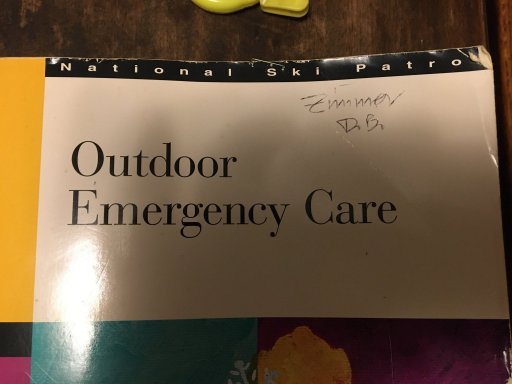
Some training would help too. The Red Cross offers many courses on first aid, CPR etc. This is one of the most comprehensive outdoor emergency care manuals available. Not sure of the cost now but it's not cheap. LOL. Lots of great information.
Nice work @OldManJack
Zim
IMG-1848.JPG
 
Last edited:
I've been in EMS for 20 years now, 10 years as a paramedic on an ambulance and 10 years on a fire engine. I have a small backpack that lives clipped to the back of my drivers seat. Bleeding control is crucial. I carry a CAT tourniquet, Combat Gauze, which has a hemostatic agent in it for packing wounds, the Israeli bandage like above which also has clotting agent in it as well as direct pressure, trauma pad, roller gauze, sterile water, hydrogen peroxide spray, sterile burn dressing, ACE bandage, trauma shears, a mirror-very useful in the event of helicopter extrication, cold packs, space blanket. Stopping the bleeding and keeping the pt warm and the key points. Don't do either of those and mortality increases substantially.
 
I've been in EMS for 20 years now, 10 years as a paramedic on an ambulance and 10 years on a fire engine. I have a small backpack that lives clipped to the back of my drivers seat. Bleeding control is crucial. I carry a CAT tourniquet, Combat Gauze, which has a hemostatic agent in it for packing wounds, the Israeli bandage like above which also has clotting agent in it as well as direct pressure, trauma pad, roller gauze, sterile water, hydrogen peroxide spray, sterile burn dressing, ACE bandage, trauma shears, a mirror-very useful in the event of helicopter extrication, cold packs, space blanket. Stopping the bleeding and keeping the pt warm and the key points. Don't do either of those and mortality increases substantially.

Excellent points. Everyone involved in Overlanding should have at least basic first aid training. Simple things make a huge difference in survivability and disability.
 
  • Like
Reactions: KAIONE and WTSMatt
Some training would help too. The Red Cross offers many courses on first aid, CPR etc. This is one of the most comprehensive outdoor emergency care manuals available. Not sure of the cost now but it's not cheap. LOL. Lots of great information.
Nice work @OldManJack
Zim
View attachment 226498
yep...TRAINING

great thread and definitely a topic i understand the importance of. @OldManJack showed a great inventory list, but i doubt i would know how or when to use half of it. i know tourniquets can be very helpful, but again, i dont know how or when to use one. i saw your book Outdoor Emergency Care and found where there is a recent version for sale. i got looking for information on this and it seems like the ski patrol really has a good bit of info with this book and classes that can be taken online as well. makes sense since ski patrol would be dealing with injuries in remote areas and probably injuries i'd see hiking...broke bones, bad cuts and injuries due to falls.
i'm definitely getting this book and educating myself.

 
yep...TRAINING

great thread and definitely a topic i understand the importance of. @OldManJack showed a great inventory list, but i doubt i would know how or when to use half of it. i know tourniquets can be very helpful, but again, i dont know how or when to use one. i saw your book Outdoor Emergency Care and found where there is a recent version for sale. i got looking for information on this and it seems like the ski patrol really has a good bit of info with this book and classes that can be taken online as well. makes sense since ski patrol would be dealing with injuries in remote areas and probably injuries i'd see hiking...broke bones, bad cuts and injuries due to falls.
i'm definitely getting this book and educating myself.


Yeah the program is pretty intense. My "practical" sessions were nerve racking. Lots of pressure. @shansonpac was spot on with his comment. The real problem in most of our backcountry incidents will be evacuation. Helicopters can be expensive but will save a life. I know in Europe, a ride in one to the hospital will cost you around $20,000. Good insurance is mandatory overseas.
Winching incidents worry me the most. I have some real world experience with parting steel rope on a few ships in the Navy. They kill and maim folks instantly so be safe and stand clear.
Don't forget to check with your Red Cross folks too. They do really good things and we should all support them.
Zim
 
The real problem in most of our backcountry incidents will be evacuation. Helicopters can be expensive but will save a life. I know in Europe, a ride in one to the hospital will cost you around $20,000. Good insurance is mandatory overseas.
Winching incidents worry me the most. I have some real world experience with parting steel rope on a few ships in the Navy. They kill and maim folks instantly so be safe and stand clear.
As a tow truck driver in a past life, the most important thing I learned about winching is NEVER stand inside of the "bite."
Cables of any type also have a finite life and need to be fully inspected on a regular basis.