Long Term Overland Set Up Questions

Sounds like you will have fun. I can talk about water as I think I have figured out a great way to not worry about it.
GuzzleH20 has the idea that you can convert to a setup in your Class A. A little ingenuity goes a long way. I did not buy theirs but created my own.
Think this way:
I want to fill my fresh water tank from “any” water source within 50 feet of the rig. Lake, 1” deep stream, pond, river, creek, etc…
Drop a “sump pump” into the source water to lift it to a bucket by your rig. Now you have to plumb in either a line to the onboard 12v pump or plumb a new pump into your fresh water lines. Then just drop the intake line in the bucket!
Proven concept in my rig!

Standard .5 micron filter
UV light (most expensive item)

A great and well-designed system! What is the pump's flow rate when you want water for your appliances, and is the UV unit rated for that flow rate? I am asking because the dosage depends on the flow rate.
Do you use a mesh / paper filter to protect your pump and the .5 micron filter? Makes sense if you draw from a pond or river.

Cheers,

Sebastian
 
Sounds like you will have fun. I can talk about water as I think I have figured out a great way to not worry about it.
GuzzleH20 has the idea that you can convert to a setup in your Class A. A little ingenuity goes a long way. I did not buy theirs but created my own.
Think this way:
I want to fill my fresh water tank from “any” water source within 50 feet of the rig. Lake, 1” deep stream, pond, river, creek, etc…
Drop a “sump pump” into the source water to lift it to a bucket by your rig. Now you have to plumb in either a line to the onboard 12v pump or plumb a new pump into your fresh water lines. Then just drop the intake line in the bucket!
Proven concept in my rig!

Standard .5 micron filter
UV light (most expensive item)

A great and well-designed system! What is the pump's flow rate when you want water for your appliances, and is the UV unit rated for that flow rate? I am asking because the dosage depends on the flow rate.
Do you use a mesh / paper filter to protect your pump and the .5 micron filter? Makes sense if you draw from a pond or river.

Cheers,

Sebastian

Thank you for your kind comments. The pump is rated at 3gpm. I will have to look up the UV light flow rate as I can’t remember. The process of drawing water from say a pond is filtered by a well pump sediment filter before it goes into the 5gal bucket. Then the typical pump strainer, then pump, then .5micron 5” filter, then the UV light. The only change I have done to the system is reducing the filter size from 10” to 5”.
 
Thank you for your kind comments. The pump is rated at 3gpm. I will have to look up the UV light flow rate as I can’t remember. The process of drawing water from say a pond is filtered by a well pump sediment filter before it goes into the 5gal bucket. Then the typical pump strainer, then pump, then .5micron 5” filter, then the UV light. The only change I have done to the system is reducing the filter size from 10” to 5”.

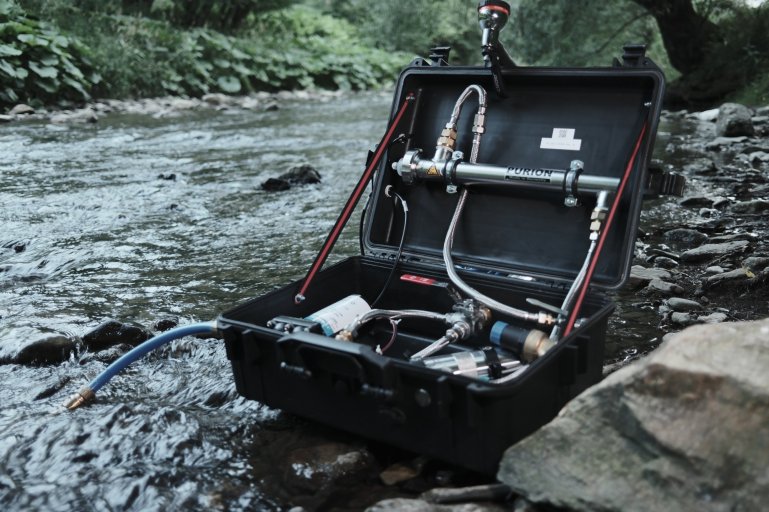
Ok, that would be important to know. I am asking because I developed a similar system in a portable case. My pump is rated at 4 gpm (15 lpm) and behind all filters (activated carbon + .1 micron) I get 2.6 gpm. Thats why I had to choose a rather large UV unit for this pump. The UV is rated at 4.4 gpm (16.6 lpm or 1000 l/h). Below you'll see the dimension of the UV :D

Anyway, I recommend to protect activated carbon and membrane filters with eg. a 5" 5 micron pre-filter. This will increase the lifetime of your pump, membrane and activated carbon filters and prevent clogging.
 

Attachments

  • DSCF0607.jpg
    DSCF0607.jpg
    603 KB · Views: 3
Thank you for your kind comments. The pump is rated at 3gpm. I will have to look up the UV light flow rate as I can’t remember. The process of drawing water from say a pond is filtered by a well pump sediment filter before it goes into the 5gal bucket. Then the typical pump strainer, then pump, then .5micron 5” filter, then the UV light. The only change I have done to the system is reducing the filter size from 10” to 5”.

Ok, that would be important to know. I am asking because I developed a similar system in a portable case. My pump is rated at 4 gpm (15 lpm) and behind all filters (activated carbon + .1 micron) I get 2.6 gpm. Thats why I had to choose a rather large UV unit for this pump. The UV is rated at 4.4 gpm (16.6 lpm or 1000 l/h). Below you'll see the dimension of the UV :D

Anyway, I recommend to protect activated carbon and membrane filters with eg. a 5" 5 micron pre-filter. This will increase the lifetime of your pump, membrane and activated carbon filters and prevent clogging.

UV light max flow rate is 2.2 gpm.
 
UV light max flow rate is 2.2 gpm.
For a pump rated at 3 gpm, the UV unit's 2.2 gpm max flow becomes the limiting factor. If actual flow through the UV exceeds that rating, contact time drops and so does the UV dose — meaning inactivation of bacteria/viruses falls short, even though the UV lamp is technically running. The fix doesn't require to change the UV: add a flow restrictor or partially close a valve before the UV to bring flow at that point down to 2.2 gpm. Most 12V pumps can handle the added backpressure.

Cheers

Sebastian
 
To the original question, I'd just sell the kids and take the LC with a small trailer........:laughing:

OK, keep the kids and go with a smaller trailer. Have the kids ever camped in a good tent, kids like their own tent.

In my Army days I just boiled the water.

As to a Class A, I'd just say, as a reminder, stay under 30 feet, in fact, a Class C at 24/27 feet would be better if you're going to boondock, get around in cities, park at Wal Mart or at the hospital.

If momma ain't happy, no one is happy!