Context:
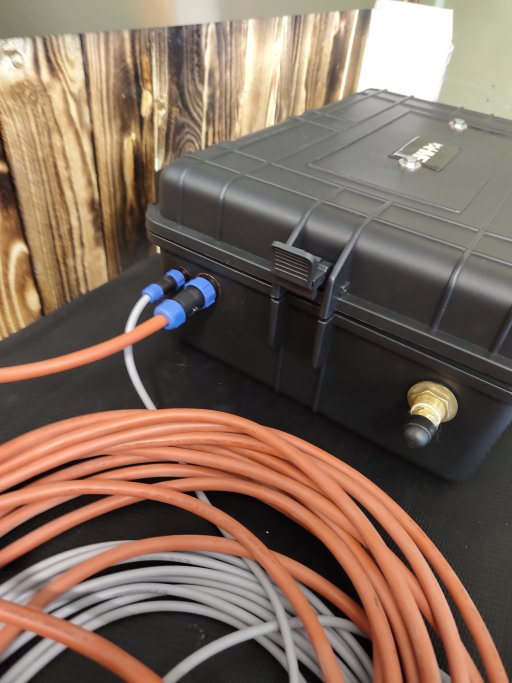
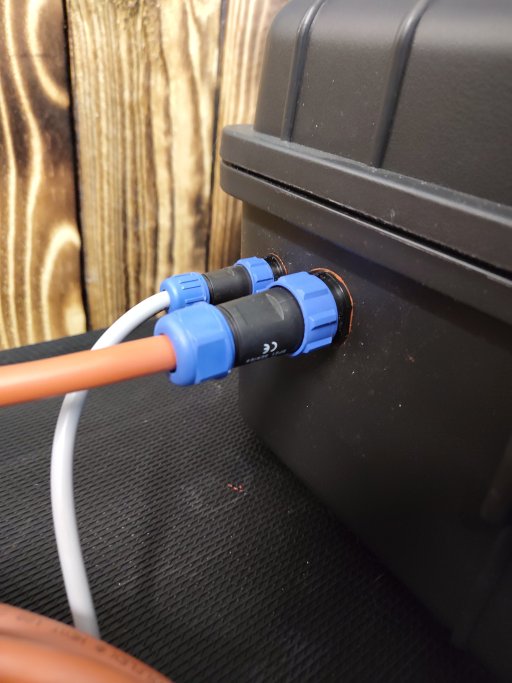
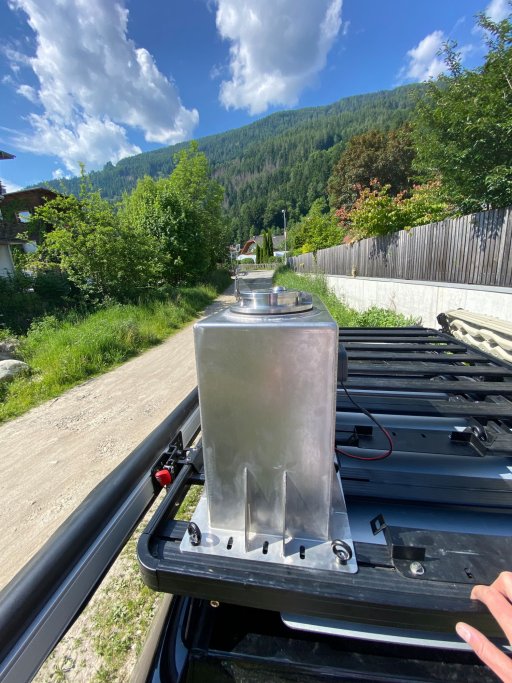
We travel self-sufficient through Europe in a Land Cruiser J120 and sleep out in nature, mostly on private land with the owner's permission. Most recently in northern Spain. Water was what kept limiting how long we could stay out — you plan the whole route around refill points. So I designed a 40 L stainless steel tank for the roof rack and had it manufactured, and built a portable case to fill it from whatever is there: rivers, lakes, cisterns, taps I don't trust. Multi-stage filtration down to 0.1 µm plus UV disinfection. Rev. A has been running as a working prototype, and I documented the whole build while I was at it. I'm currently testing Rev. B: electronics moved into a separate case, waterproof connectors between the two, and the pressure reducer deleted because it wasn't earning its space.
What it is:
- 2 waterproof cases (IP67)
Case 1: pump + filtration + UV disinfection
Case 2: power supply and UV control unit
- Mesh filter in feed to the pump, after the pump you have two flow modes:
- Rev B is powered by a single 230V source from my EcoFlow Delta 2 Max
- Input is a river, a lake, a cistern, or a tap I don't trust. Output goes into a 40 L stainless steel tank
- Open documentation to repair the system on the go
What went wrong and what I've learned:
- Power sources: Rev. A originally had two separate 12 V inputs, one for the pump and one for the UV. That doesn't work off an EcoFlow: the 12 V panel is capped at 10 A. Rev. B runs a single 230 V feed into a Mean Well SPV in a second case, which supplies both. Costs me conversion losses, but it's stable and the wet side is free of sensitive electrical components. A 12 V-direct and a hand-pump version are next.
- Filter producers share little to no information about pore sizes: This is why I document everything openly.
- The filter housings I used (Alb Filter) have no axial fixation of the element. If a cartridge lifts in its seat, water bypasses the element entirely. I told the manufacturer about this—no response. I documented a quick fix using a wave spring.
- Soldered connections on 4 mm² tore off under cable strain. I may have to switch to different WEIPU connectors.
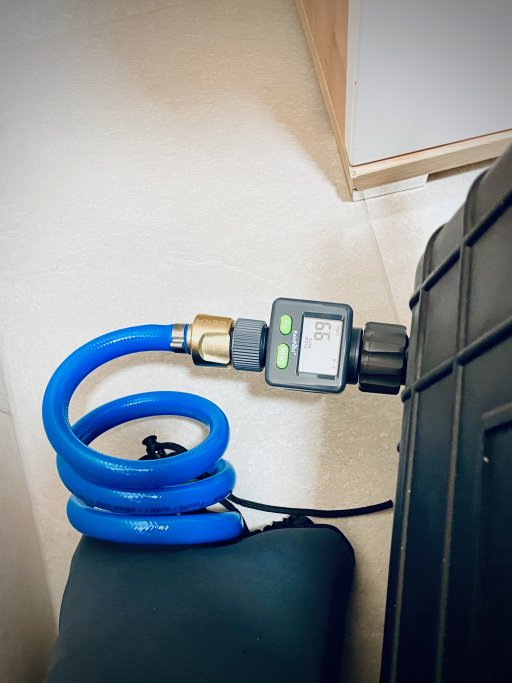
- Dropped the pressure reducer in Rev. B. The pressure drop across the filters is just right.
- Cost is the honest problem: roughly 1700€ in parts for Rev. A, and the UV unit plus the filter housings are 66 % of that on their own. Working on a cheaper filter stage right now.
- I deliberately decided against installing a RO system: Wastewater, remineralization, and complexity.
Rev. A was field tested through the Pyrenees, the Bardenas Reales and the Verdon.
Happy to answer your questions!
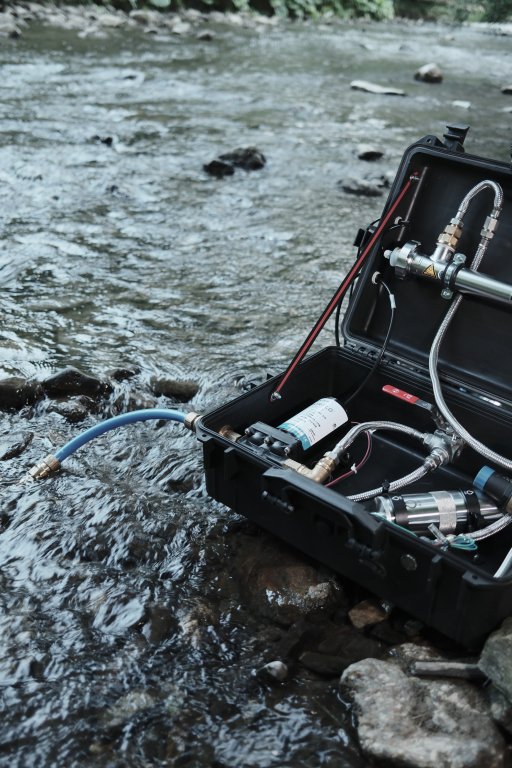
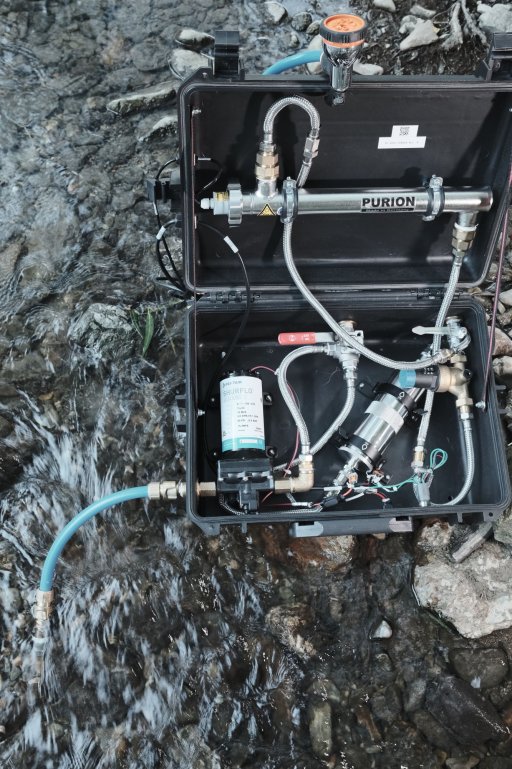
We travel self-sufficient through Europe in a Land Cruiser J120 and sleep out in nature, mostly on private land with the owner's permission. Most recently in northern Spain. Water was what kept limiting how long we could stay out — you plan the whole route around refill points. So I designed a 40 L stainless steel tank for the roof rack and had it manufactured, and built a portable case to fill it from whatever is there: rivers, lakes, cisterns, taps I don't trust. Multi-stage filtration down to 0.1 µm plus UV disinfection. Rev. A has been running as a working prototype, and I documented the whole build while I was at it. I'm currently testing Rev. B: electronics moved into a separate case, waterproof connectors between the two, and the pressure reducer deleted because it wasn't earning its space.
What it is:
- 2 waterproof cases (IP67)
Case 1: pump + filtration + UV disinfection
Case 2: power supply and UV control unit
- Mesh filter in feed to the pump, after the pump you have two flow modes:
- Tank filling with a sediment and active carbon filter
- Drinking water mode with a active carbon, 0.1 µm hollow-fibre and UV disinfection unit
- Rev B is powered by a single 230V source from my EcoFlow Delta 2 Max
- Input is a river, a lake, a cistern, or a tap I don't trust. Output goes into a 40 L stainless steel tank
- Open documentation to repair the system on the go
What went wrong and what I've learned:
- Power sources: Rev. A originally had two separate 12 V inputs, one for the pump and one for the UV. That doesn't work off an EcoFlow: the 12 V panel is capped at 10 A. Rev. B runs a single 230 V feed into a Mean Well SPV in a second case, which supplies both. Costs me conversion losses, but it's stable and the wet side is free of sensitive electrical components. A 12 V-direct and a hand-pump version are next.
- Filter producers share little to no information about pore sizes: This is why I document everything openly.
- The filter housings I used (Alb Filter) have no axial fixation of the element. If a cartridge lifts in its seat, water bypasses the element entirely. I told the manufacturer about this—no response. I documented a quick fix using a wave spring.
- Soldered connections on 4 mm² tore off under cable strain. I may have to switch to different WEIPU connectors.
- Dropped the pressure reducer in Rev. B. The pressure drop across the filters is just right.
- Cost is the honest problem: roughly 1700€ in parts for Rev. A, and the UV unit plus the filter housings are 66 % of that on their own. Working on a cheaper filter stage right now.
- I deliberately decided against installing a RO system: Wastewater, remineralization, and complexity.
Rev. A was field tested through the Pyrenees, the Bardenas Reales and the Verdon.
Happy to answer your questions!