Beginner questions!!

@Mark_cd8bb2
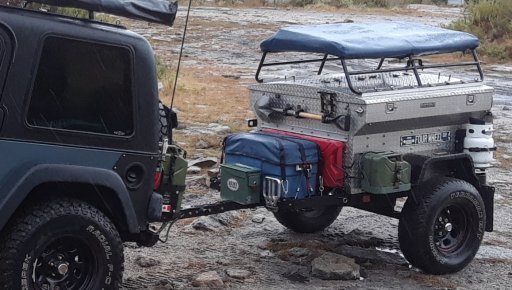
Thank you for the tip! I’ve already ordered a roof top tent, and I’m planning on building a kitchen area on one side. Cause of my age I don’t plan on going away for weeks at a time, more of just a couple of days to a week. But I’ve considered a harbor freight 4x8 trailer and swapping the axle along with welding up a frame to make it look like a mix of a regular overland trailer and a teardrop trailer!
 
@Mark_cd8bb2
Thank you for the tip! I’ve already ordered a roof top tent, and I’m planning on building a kitchen area on one side. Cause of my age I don’t plan on going away for weeks at a time, more of just a couple of days to a week. But I’ve considered a harbor freight 4x8 trailer and swapping the axle along with welding up a frame to make it look like a mix of a regular overland trailer and a teardrop trailer!
@armyRN has a very neat HF trailer build… another DIY trailer that comes to mind is @GHCOE foam trailer.
 
  • Like
Reactions: 9Mike2
This is VERY true. I carry some tools and equipment that most people don't, like a multimeter and all sorts of stuff to fix and patch electrical gear. .
Multimeter is definitely part of a basic kit every overlander should carry, especially with newer rigs. I also carry spare hoses and a fuel pump, but haven't had to use any, yet.
 
  • Like
Reactions: Scottdabeast213
Multimeter is definitely part of a basic kit every overlander should carry, especially with newer rigs. I also carry spare hoses and a fuel pump, but haven't had to use any, yet.

I don't disagree, but like every other tool, it's only useful if one knows how to use it.

@pl626
That’s a good idea! Is there any other pieces of engine equipment I should carry?

I don't carry any spare parts currently, other than fuses and Relays. That being said, I plan on building up a kit with the following spares:

  • Tie rods
  • Serpentine belts
  • Upper/lower radiator hoses
  • Fuel line (also used for transmission cooler)
  • Oem alternator
  • Trailer wheel bearings
  • Lug nuts
  • Wheel studs
  • Various gauge of wire
  • Heat shrink tubing
  • Marine grade but connectors (various sizes)
  • Jb weld (you never know)
  • Fuel filters
  • Air filter
Once I lock the front, I might carry a spare cv on longer trips, but I'm not sure if my rig has enough power to snap a cv, even when locked.

When upgrading parts that still work, it's a good idea to hang onto the old ones as spares, if you have room to store them.

The OEM alternator on first Gen Xterras sits pretty low on the engine. When going through lots of mud and water, it's notorious for getting gunked up and failing. I have a 180A replacement I need to put in. When I do, I plan on carrying my OEM one as a backup on longer trips.

Every vehicle is going to have different weak points. That's where I'd focus on having spares for.
 
@Mark_cd8bb2
Thank you for the tip! I’ve already ordered a roof top tent, and I’m planning on building a kitchen area on one side. Cause of my age I don’t plan on going away for weeks at a time, more of just a couple of days to a week. But I’ve considered a harbor freight 4x8 trailer and swapping the axle along with welding up a frame to make it look like a mix of a regular overland trailer and a teardrop trailer!

You might looking a Northern Tool trailer kit. That's where I started
 
  • Like
Reactions: Scottdabeast213
I don't disagree, but like every other tool, it's only useful if one knows how to use it.


I don't carry any spare parts currently, other than fuses and Relays. That being said, I plan on building up a kit with the following spares:

  • Tie rods
  • Serpentine belts
  • Upper/lower radiator hoses
  • Fuel line (also used for transmission cooler)
  • Oem alternator
  • Trailer wheel bearings
  • Lug nuts
  • Wheel studs
  • Various gauge of wire
  • Heat shrink tubing
  • Marine grade but connectors (various sizes)
  • Jb weld (you never know)
  • Fuel filters
  • Air filter
Once I lock the front, I might carry a spare cv on longer trips, but I'm not sure if my rig has enough power to snap a cv, even when locked.

When upgrading parts that still work, it's a good idea to hang onto the old ones as spares, if you have room to store them.

The OEM alternator on first Gen Xterras sits pretty low on the engine. When going through lots of mud and water, it's notorious for getting gunked up and failing. I have a 180A replacement I need to put in. When I do, I plan on carrying my OEM one as a backup on longer trips.

Every vehicle is going to have different weak points. That's where I'd focus on having spares for.
Excellent list. JB Weld is definitely a must, as is a tube of gasket sealer. Land Rover ownership and overlanding necessitate my trail repair kit/preparedness/paranoia...
 
Excellent list. JB Weld is definitely a must, as is a tube of gasket sealer. Land Rover ownership and overlanding necessitate my trail repair kit/preparedness/paranoia...
Do you have enough space to carry a whole new engine? I kid. If I had the time to keep an old disco 2 running, I'd love to own one.
 
If it has not been mentioned, with today's computerized vehicles probably on of the most useful tools is a OBDII scanner (Bluetooth versions on Amazon for under $20) and a list of what all the codes for your particular vehicle mean. This will allow you to send a companion off to the autoparts store to get the correct gizmo to get the rig running again, If travelling solo, then add a satellite communication device to your kit so that you can message a buddy to come help out (bringing the right parts and tools with them). Bailing wire/duct tape and ratchet straps can do wonders on a broken mechanical part, but not much you can do with a failed sensor unless you have a new one. a bit of online research for your vehicle will turn up most likely to fail electrical components (often cam, crank, throttle position & Idle air controls) Then I buy a set of spares and tuck them away in the rig (if vehicle is close to or over 100k, I replace them keeping the old ones as spares in the rig). Always better and easier to do good rig inspections prior to a trip and fix stuff in the driveway rather than on the trail.
 
If it has not been mentioned, with today's computerized vehicles probably on of the most useful tools is a OBDII scanner (Bluetooth versions on Amazon for under $20) and a list of what all the codes for your particular vehicle mean. This will allow you to send a companion off to the autoparts store to get the correct gizmo to get the rig running again, If travelling solo, then add a satellite communication device to your kit so that you can message a buddy to come help out (bringing the right parts and tools with them). Bailing wire/duct tape and ratchet straps can do wonders on a broken mechanical part, but not much you can do with a failed sensor unless you have a new one. a bit of online research for your vehicle will turn up most likely to fail electrical components (often cam, crank, throttle position & Idle air controls) Then I buy a set of spares and tuck them away in the rig (if vehicle is close to or over 100k, I replace them keeping the old ones as spares in the rig). Always better and easier to do good rig inspections prior to a trip and fix stuff in the driveway rather than on the trail.

Good advice! I am always amazed that so many people are not prepared.
 
  • Like
Reactions: Scottdabeast213
We always carry spare hoses and belts, now days its a single belt, and a tensioner with a tool to swap it out. As a yearly PM I use to change belts and hoses and take the used one and zip tie them under the hood for Emergency . Another tool I keep in each vehicle is like a bent Ice pick to install tight hose or belt plus Snap rings and stuff like that..
e
 
We always carry spare hoses and belts, now days its a single belt, and a tensioner with a tool to swap it out. As a yearly PM I use to change belts and hoses and take the used one and zip tie them under the hood for Emergency . Another tool I keep in each vehicle is like a bent Ice pick to install tight hose or belt plus Snap rings and stuff like that..
e
I would far rather spend a bit more and change belts and such more often than I need to in the driveway than have to change just one in the field, fortunately the newer belts and tensioners last much longer than the old V belts, but some of them snake around so much it can be a real chore to change them and even worse when its over 100 degrees, everything is filthy and your holding up the whole group on a trail run..lol Jeep even makes it more fun by pretty much having to remove the alternator to get the belt changed...
 
I would far rather spend a bit more and change belts and such more often than I need to in the driveway than have to change just one in the field, fortunately the newer belts and tensioners last much longer than the old V belts, but some of them snake around so much it can be a real chore to change them and even worse when its over 100 degrees, everything is filthy and your holding up the whole group on a trail run..lol Jeep even makes it more fun by pretty much having to remove the alternator to get the belt changed...

I'm with you here. I used to try to bring every possible spare ever... and quickly realized bringing it all and all the right combos of tools to do it all just becomes too bulky, heavy and cumbersome. The strategy of just replacing wear items ahead of schedule has always worked well for me on my sand rails and SxSs, and I've always done maintenance ahead of schedule on my vehicles anyway. At the end of the day some basic stuff, espec easy to change things that are known to fail often on your particular vehicle are okay. But you can never bring EVERYTHING and it'll always be the one part you don't carry (or don't have the right tools to change, or access is impossible without major disassembly) that fails. Now I go for a good basic tool kit, some emergency band aid stuff (rescue tape, JB weld, colby valve stems, plug kit, various lengths of wire with fuse holders and various terminals/connectors, etc.) and figure if anything else goes bad I'll just have to deal with it by getting off the trail. The best "tool" or "spare" you can bring is a sat communication device so you can get help if you're in the middle of nowhere.

-TJ
 
@Silver rover
Hi! Yes I’ve ordered a roof top tent from front runner and I’m thinking a 4x8 trailer from harbor freight. And I think I’m gonna add propane and water lines to make longer trips easier and I’m gonna add solar aswell. I’m trying to go for a utility camper and also make it light

I built a modified teardrop body 10 ft long including bull nose) rear 2ft kitchen area, propane stove, power pack, 200 watts solar, refigerator/freezer, water pump &filter & storage. inside 30 gal water tank under bed, 14 inch shelf over back of bed area. Roof opens up so we can stand in the bull nose. Propane tank on the hitch frame.
Timbren suspension off road spindles, electric brakes, 17 inch wheels.
See a pic in my profile
 
  • Wow
Reactions: 9Mike2