Question regarding a simple switch

HYRYSC

Rank III

Enthusiast III

676
Southwest Missouri
First Name
Robert
Last Name
Conn
Member #

29868

Ham/GMRS Callsign
KD0YIN
I have done a bit of simple wiring for lights, USB ports etc.

On a simple switch for a single light, I have ran the power straight from the battery to the light (with a fuse inline) and then put the switch on the ground or negative. Is this a good practice or should the switch be on the power side?

 
That's my standard practice. Generally it can be done with one fused hot wire. The switch goes to a short negative cable that connects to the frame (assuming the battery is grounded that way). This saves wire and helps reduce voltage drop.
 
Not really an issue, I prefer the hot side as the power is cut off to the appliance in case it finds a “ground” from contact with the Jeep. Just my 2 cents, can’t go wrong either way…
 
  • Like
Reactions: Sparksalot
It's best to put the switch on the hot side. That leaves more of the circuit dead when power is switched off and less likely to short to ground when the switch is off
 
It addressed but very critical information… what kind of light? And how many amps is the switch rated for. To high of a load can (and will) cause the switch to fail and either let out the magic smoke or catch fire.
 
It addressed but very critical information… what kind of light? And how many amps is the switch rated for. To high of a load can (and will) cause the switch to fail and either let out the magic smoke or catch fire.

This. If the light draws more amps than the switch is rated to handle, it will burn out.

When this happens, if your lucky, the switch will burn up, and your light will stop working. If you're unlucky, the switch will overheat, short out, and catch on fire.

You need to look at the Amp rating of your switch. Most switches can handle 20A. As long as your light draws less than 20A,you should be fine.

If you're unsure of the the rated amps of the light, you can get a rough estimate using the following formula:

Watts / volts = amps

So, if your light draws 300W, using the above formula...

300W / 12v = 25A

If the light actually draws 300w when running, that means it pulls 25 amps. This would be too much for a 20 Amp switch, and would cause it to burn out.

On that case, you would need to use a relay setup.
 
  • Like
Reactions: M Rose
This. If the light draws more amps than the switch is rated to handle, it will burn out.

When this happens, if your lucky, the switch will burn up, and your light will stop working. If you're unlucky, the switch will overheat, short out, and catch on fire.

You need to look at the Amp rating of your switch. Most switches can handle 20A. As long as your light draws less than 20A,you should be fine.

If you're unsure of the the rated amps of the light, you can get a rough estimate using the following formula:

Watts / volts = amps

So, if your light draws 300W, using the above formula...

300W / 12v = 25A

If the light actually draws 300w when running, that means it pulls 25 amps. This would be too much for a 20 Amp switch, and would cause it to burn out.

On that case, you would need to use a relay setup.


So this would be a case to put the switch on the ground correct? Then if the light pulls more power than the switch can handle for whatever reason, it will pop the fuse?
 
So this would be a case to put the switch on the ground correct? Then if the light pulls more power than the switch can handle for whatever reason, it will pop the fuse?
No the fuse won’t pop, because the fuse would be rated for the lights… if you rate the fuse for the switch, the lights will cause the fuse to blow.

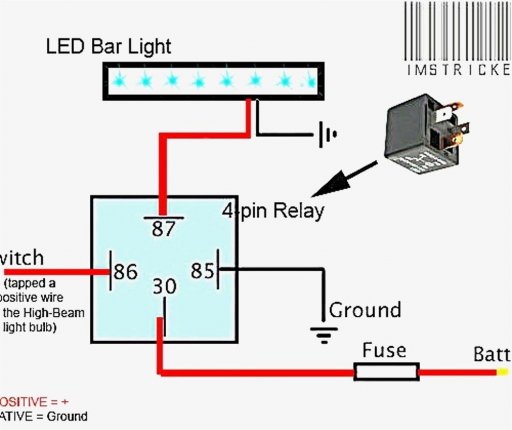
You need to use a relay. A relay is an electromagnetic switch used to transfer low amp draw to high amp draw.

E432883A-E2CF-488F-AC58-1FC8DFB3E3E0.jpeg
 
  • Like
Reactions: HYRYSC
No the fuse won’t pop, because the fuse would be rated for the lights… if you rate the fuse for the switch, the lights will cause the fuse to blow.

You need to use a relay. A relay is an electromagnetic switch used to transfer low amp draw to high amp draw.

View attachment 213413


Gotcha! The lights in question are a very low wattage, but in November I will be wiring up some additional lights to the rack as well as some rock lights and I will certainly use relays for all of those and rewire the light in question while I am at it.

Appreciate all that contributed to helping me understand this better.